
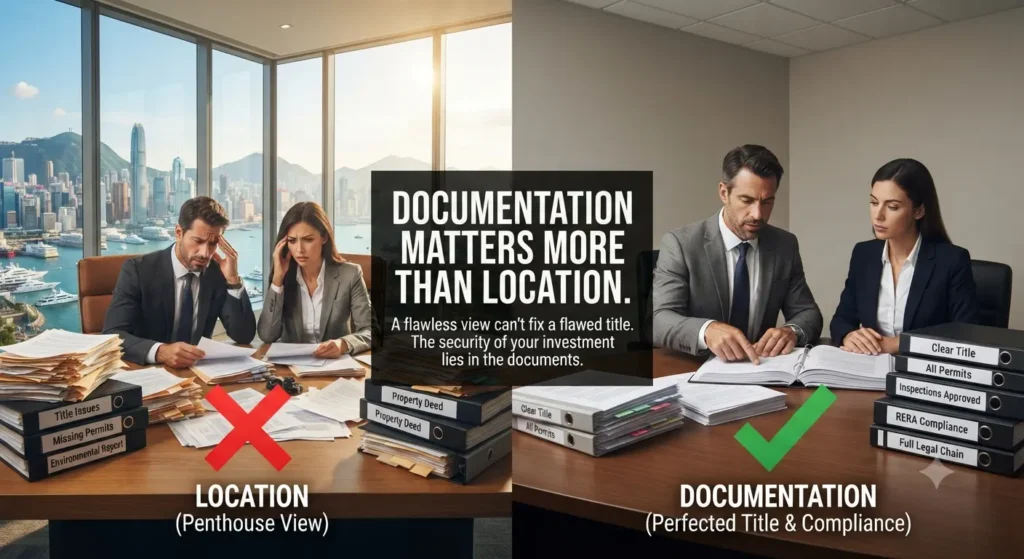
When buying real estate, one phrase is repeated again and again: “Location is everything.” While location certainly influences property value and future appreciation, it should never be the only factor guiding your decision.
A prime location may attract buyers, but if the property’s legal documents are incomplete or disputed, your investment can quickly become a financial burden. Whether you are purchasing a residential plot, apartment, farmhouse, or agricultural land, proper documentation is the foundation of a secure real estate transaction.
This article explains why documentation often matters more than location and how it protects your investment.
The Myth That Location Alone Guarantees a Good Investment
Many buyers choose properties based on factors such as:
- Proximity to highways
- Schools and hospitals
- Metro connectivity
- Commercial hubs
- Future infrastructure projects
- Rental potential
While these factors affect value, they cannot compensate for weak or incomplete legal documentation. Even a property in the best location can become difficult to sell or transfer if ownership records are unclear.
Documentation Protects Your Ownership
The most important benefit of proper documentation is proof of legal ownership.
Before purchasing any property, verify documents such as:
- Title deed
- Sale deed
- Mutation records
- Property tax receipts
- Approved layout plans
- Identity proof of the seller
- Encumbrance details
- Land records, where applicable
These documents confirm that the seller has the legal right to transfer ownership and that the property can be sold without legal complications.
Avoid Costly Legal Disputes
One of the biggest risks in real estate is buying a property involved in legal disputes.
Common issues include:
- Ownership conflicts
- Family inheritance claims
- Court cases
- Bank mortgages
- Government acquisition notices
- Unauthorized construction
Without proper verification, buyers may spend years resolving legal matters that could have been avoided before purchase.
Documentation Makes Financing Easier
Banks and financial institutions carefully verify property documents before approving a home or land loan.
A property with complete legal documentation usually:
- Qualifies for easier loan approval
- Receives better financing options
- Builds confidence among lenders
- Reduces processing delays
Incomplete paperwork can lead to loan rejection even if the property is in a premium location.
Better Resale Value
Future buyers will also verify the property’s legal status.
A well-documented property is generally:
- Easier to sell
- More attractive to serious buyers
- Less likely to face negotiation over legal risks
- Faster to transfer during resale
Strong documentation increases buyer confidence and supports smoother transactions.
Documentation Reduces Financial Risk
Many buyers lose money because they pay advance amounts without checking legal records.
Problems often arise when:
- The seller is not the legal owner.
- The same property is promised to multiple buyers.
- Government approvals are missing.
- Boundaries do not match official records.
- Required permissions are incomplete.
Proper documentation helps identify these risks before any payment is made.
Verify Every Promise in Writing
Marketing brochures and verbal commitments should never replace legal documents.
Ensure that the agreement clearly mentions:
- Property dimensions
- Sale price
- Payment schedule
- Possession date
- Included amenities
- Refund conditions
- Responsibilities of both parties
Written agreements protect both buyers and sellers if disputes arise.
Documentation Is Essential for Land Investments
For agricultural land and plotted developments, document verification becomes even more important.
Buyers should carefully review:
- Ownership history
- Land classification
- Mutation status
- Survey details
- Khasra and Jamabandi records (where applicable)
- Road access rights
- Local authority approvals
These records help confirm that the land can legally be transferred and used as intended.
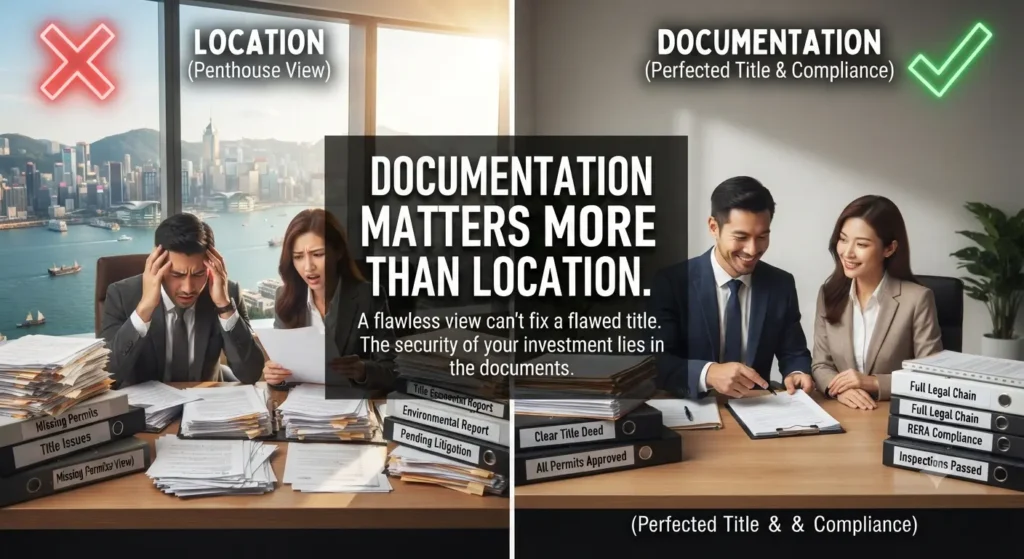
A Good Location Cannot Fix Legal Problems
Imagine two investment options:
Property A
- Excellent location
- Incomplete ownership documents
- Pending legal dispute
Property B
- Developing location
- Clear ownership
- Complete legal records
- Proper approvals
In most cases, Property B is the safer investment. Infrastructure and property values can improve over time, but unresolved legal issues can delay ownership, reduce resale value, or even prevent the transaction from being completed.
Tips Before Buying Any Property
Follow these best practices before making any payment:
- Verify ownership documents thoroughly.
- Confirm the seller’s identity.
- Check for loans or legal disputes.
- Review approvals from relevant authorities.
- Visit the property personally.
- Read every clause in the agreement.
- Consult a qualified property lawyer.
- Keep records of every payment and communication.
Final Thoughts
Location plays an important role in determining a property’s future value, but documentation determines whether your investment is legally secure. A property with complete and verified legal records provides peace of mind, simplifies financing, supports future resale, and protects you from costly disputes.
Before purchasing any residential plot, apartment, farmhouse, or agricultural land, make documentation your first priority. A legally verified property offers far greater long-term security than an attractive location backed only by promises.
FAQs – Why Documentation Matters More Than Location
1. Why is documentation more important than location when buying property?
Documentation proves the legal ownership and status of a property. While a good location can increase property value, incomplete or incorrect documents can lead to legal disputes, financial losses, and difficulties in transferring ownership.
2. Which property documents should I verify before purchasing?
You should check the title deed, sale deed, mutation records, property tax receipts, approved layout plan, identity proof of the seller, encumbrance certificate (where applicable), and any local land records relevant to the property.
3. Can a property in a prime location still have legal issues?
Yes. Even properties in highly desirable locations may have ownership disputes, unpaid loans, unauthorized construction, or pending court cases. Location alone does not guarantee a safe investment.
4. How do proper documents protect property buyers?
Proper documentation confirms that the seller has the legal right to sell the property. It also helps buyers avoid fraud, verify ownership, secure financing, and complete the registration process without unnecessary complications.
5. Why do banks verify property documents before approving a loan?
Banks check property documents to ensure the property has a clear legal title and can be used as collateral. Complete and verified documentation improves the chances of quicker loan approval.
6. What are the risks of buying a property without document verification?
Buying without proper verification can result in ownership disputes, financial losses, delayed registration, legal cases, loan rejection, and difficulties in selling the property in the future.
7. Should I hire a property lawyer to review the documents?
Yes. A qualified property lawyer can examine the legal documents, verify ownership, identify hidden risks, and ensure the transaction complies with applicable laws. Professional guidance can help you make a safer investment.
8. Is documentation equally important for plots, apartments, and farmland?
Absolutely. Every type of property requires proper legal verification. Whether you are buying a residential plot, apartment, farmhouse, or agricultural land, complete documentation is essential for a secure purchase.
9. How does proper documentation improve resale value?
A property with clear legal records is easier to sell because buyers and lenders have greater confidence in its ownership and legal status. Complete documentation also helps speed up the resale process.
10. What should buyers do before making any advance payment?
Before paying token money or any advance amount, verify all property documents, inspect the property, confirm the seller’s ownership, check for legal disputes, understand the payment terms, and sign a written agreement that clearly defines the conditions of the transaction.