
Investment in farmlands has become one of the most sound and profitable assets in India. Due to the increasing demand for food, biofuels, and organic produce, having farmland is no longer a passion project, but an economic power tool. Farm land is an investment that is being actively sought by investors nowadays as a long-term wealth creation and diversification of the portfolio, as well as inflation protection.
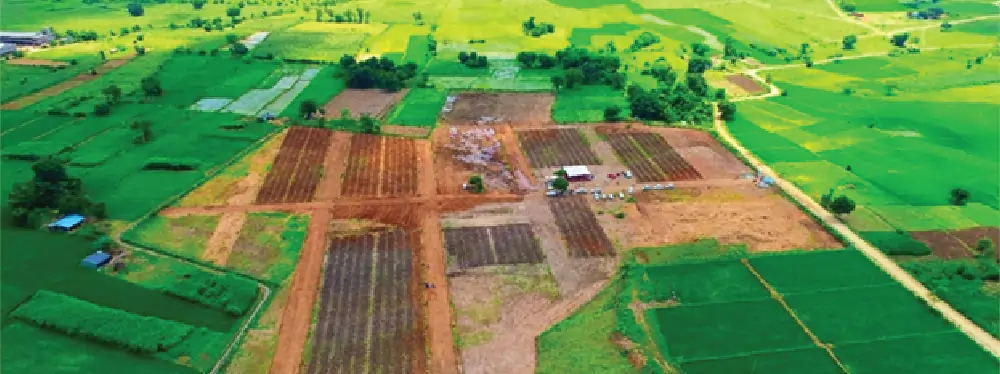
Conceptualizing the Agricultural Land Investment.
When you put money into farm land, you are purchasing a real asset, which is an income-generating asset and which is growing. Contrary to volatile stocks like crypto or stocks, agricultural land for sale has stable value growth and safety.
In India, investments in farmlands are on the rise due to:
The shortage of arable land.
Increasing population and demand for food.
Rural development and sustainability in agriculture by the government.
This mix also means that agricultural land investment would be a good move by such investors to be stable and have appreciation prospects.
Expectation of major gains from investment in agricultural land.

1. Constant Valuation and Capital Development.
The prices of agricultural land in India have been appreciating steadily in the past. The value of land in rural and semi-urban areas increases tremendously as cities develop and the infrastructure is enhanced. With huge returns in the long-term, particularly in growth corridors around major metros, investors will be able to enjoy high returns.
2. Farmland Investment as a source of passive income.
You can sell your land to farmers or agritech businesses, which will provide you with passive income. This renders farmland investment as a growing and a revenue generating asset. Organic farming, fruit plantations, or agro-forestry projects are also used by many investors to make their earnings.
3. Inflation Hedge
Farmland is also not devalued by inflation, as is the case with fixed deposits or savings. The price of commodities grows, resulting in the value of agricultural land investment and its products appreciating to maintain purchasing power.
4. Tax Advantages
According to the Indian tax laws, agricultural income is usually tax-free in terms of income tax. This makes the farmland owners a favorite over the other real estate ventures. Moreover, capital gains, through selling land in the rural agrarian areas, can also be tax-free under certain circumstances.
Starting your agricultural land investment.
1. Research and Location Selection.
A profitable farmland investment lies in the location. Target the regions that have good soil fertility, irrigation, and connectivity. The best agricultural opportunities include the Southern states such as Karnataka, Tamil Nadu, and Andhra Pradesh, whereas the urban investors are interested in Haryana and Maharashtra because of the important cities around.
2. Legal Due Diligence
- Check before buying agricultural land to sell:
- Records of title deeds and ownership.
- Rural or urban classification (agriculture)
- Zoning and conversion of land limits.
- Mortgages or unresolved conflict.
The non-farmers are also advised to check whether they are eligible to purchase farmland because the laws are not uniform across the states.
3. Soil and Water Testing
Long-term productivity is defined by the soil fertility and the availability of water. Complete simple soil and water tests prior to concluding your buying decision so that you have sustainable yields.
4. Professional Management
Most investors are fond of managed farm land services where professional companies manage farmland cultivation, harvesting, and maintenance. This model will enable you to get returns without having to be involved.
Legal and Regulatory Insights.

The law in India regarding investment in agricultural land varies according to the state. For example:
Maharashtra and Karnataka are the two states where the purchase of farmland is restricted to registered farmers.
The investors have fewer restrictions in states such as Rajasthan or Uttar Pradesh.
Change of Land Use (CLU) is needed to convert agricultural land into non- agricultural land (residential or commercial).
You will be required to know how to sell farmland in India legally, in case you intend to sell it later. Make sure that the ownership records have been updated, and before selling your property, you get a No Objection Certificate (NOC).
Risks and How to Manage Them
1. Regulatory Restrictions
Farmland cannot be sold and bought easily by all investors. In order to reduce risks, collaborate with legal professionals who are familiar with local land laws.
2. Market Liquidity
Farmland can also be sold more slowly than apartments. Good location and good documentation enhance ease of exit.
3. Operational Challenges
Productivity is influenced by weather and crop cycles. Use professional farm management or lease contracting to guarantee a constant income.
Future Prospect of Indian Agricultural Land Investment.
The agriculture sector in India accounts for close to 20 percent of the GDP in the country, and the demand is increasing for organic food, dairy, and timber. Agricultural land investment is in a new phase of development with such technological improvements as precision farming and irrigation conducted with the help of IoT.
Investors have now seen farmland not only as an asset of the traditional kind but also as a sustainable and income-generating opportunity. It is projected to realize rising institutional demand and a rise in farmland value in the next decade.
How to Sell Farmland in India.
In India, selling farmlands is a process that has various legal and procedural stages:
- Acquire new land documents, encumbrance certificates and tax receipts.
- Check the eligibility of buyers according to the state laws.
- Register the deed of sale and transfer ownership by the registrar’s office.
The fair market price should be set, and this can be done by visiting neighboring agricultural land to find a sale listing.
Good documentation guarantees the ease of transaction and enhanced resale.
Resolution – Why it is rational to invest in Agricultural Land.
To sum up, agricultural land investment is among the safest as well as most profitable long-term opportunities in India. It presents appreciation, passive earnings, and tax benefits, and maintains capital. Farmland investment is a viable asset that can be sustained when it is managed properly and over time. You may be venturing into agricultural land on sale or are trying to sell agricultural land in India; whichever the case, good research, legal clarity, and professional advice will help you get maximum returns.
FAQs
1. Who qualifies to buy agricultural land in India?
In the majority of Indian states, only those who possess the status of a farmer can purchase agricultural land. The state laws vary greatly; for example, Maharashtra and Karnataka demand that you be a registered agriculturist. The Non-Resident Indians (NRIs) are not usually allowed to purchase agricultural land, but may inherit it.
2. What are the main financial advantages?
Farmland serves as a powerful inflation insurance and price fluctuation insurance. Historically, the Indian agricultural land is worth 10-12 percent every year. The government also does not impose tax on the agricultural income according to Section 10 (1) of the Income Tax Act.
3. What should I do to make money out of the land every month?
Investors employ a number of tactics to realize their plots. You can rent the land to the farmers in the area at a fixed rate, or you can begin farming organically and access high-end markets. The managed farmland models have now enabled urban investors to make profits on high-priced crops such as turmeric or medicinal plants without having to be involved in the day-to-day running of these farms.
4. What are some of the dangers before purchase?
The largest problem is liquidity, which is more difficult since it is hard to sell land as compared to stocks or gold. You should also check the Title Deed and Mutation Letter to eliminate any legal wrangles. In addition, agricultural land to residential conversion (or NA conversion) is a complicated process that is state-controlled and is frequently limited.
5. Are there recurrences of costs?
Even so-called low-maintenance land has its own hidden costs. You will have to spend on fencing, security against trespassing, and irrigation facilities in case you want to farm. The issue of labor deficiency in the rural regions may also raise the cost of operations in active farming.