
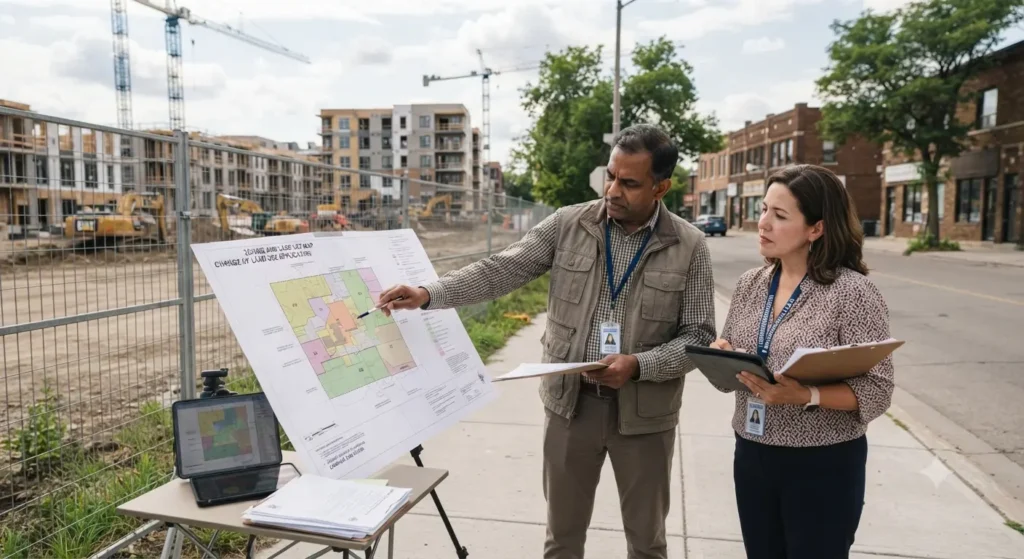
Ownership of a plot may be thought of as a long-term investment, but not all forms of construction and development are legal on all plots. A key consideration that buyers need to be aware of when buying land is CLU and relevant Land-Use approvals.
CLU is usually used to describe Change of Land Use. It is an approval which might be required in the event that a land parcel is proposed to be used for a purpose other than the use permitted by the applicable land-use plan or revenue records. Additional permissions may be required based on the location, proposed development and local regulations.
When buying a property, it is important to know what these requirements are beforehand to prevent legal hassles, unforeseen costs and limitations to building.
What Is CLU?
CLU is short for Change of Land Use. It’s a simple permission to modify the approved or designated use of a parcel of land.
For instance, agricultural lands mapped or identified for agriculture do not necessarily qualify for residential, commercial, institutional or other uses. Where the activity is likely to be different to the current allowed use then a CLU approval may be required from the relevant authority.
The actual process will depend on the State, the development authority, the master plan, the zoning and the type of project being proposed.
Why is CLU important to a land buyer?
A large attractive parcel might be available to a buyer for a good price, but is the desired use legal?
The approval of a CLU may be useful for a purchaser who wishes to:
- Develop residential structures
- Establish commercial activities
- Construct a farm home or recreational property.Build a farm home or recreation land.
- Develop a plot that has been created.Develop a plotted development.
- Establish institutional facilities
- Undertake certain types of industrial or other permitted activities
CLU isn’t required for every land transaction though. The applicability of its use will be determined by the land parcel and proposed use.
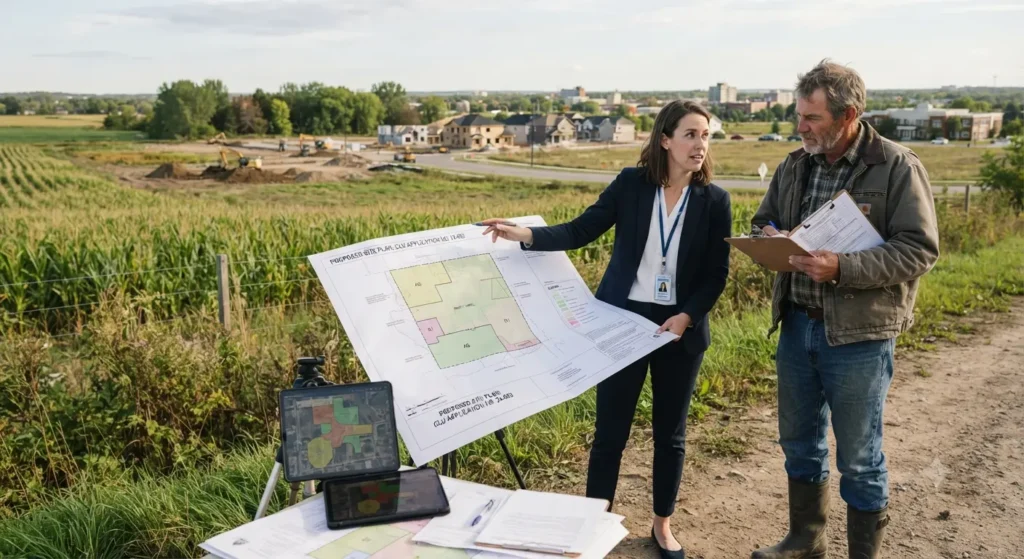
Before purchasing, find out what the current zoning is for the property.
Before buying land, it is essential that the buyer is aware of the current legal category and land use of the land.
Some of the documents and information of importance can be:
- Previous title documents and sale deed.
- Revenue records
- Records of ownership of land (Jamabandi)
- Khasra details
- Mutation records
- Plans that have been approved for land use or zoning.
- Encumbrance information
- Applicable development regulations
- Any existing permissions and approvals.
These documents can be used to assist in determining if the proposed use is consistent with the existing land use system.
CLU Is Not The Only Approval
A frequent error is assuming that the acquisition of CLU means the construction and development of the property is permitted.
In many cases, the process of obtaining CLU and relevant land-use approvals is just one component in the broader regulatory scheme.
Other approvals that might be needed include building plan approval, layout approval, environmental permissions, access or road related permissions, utility approvals, fire safety approvals and other local clearances as applicable to the project.
You should therefore check to see if there are any approvals that apply to the property you are interested in, and not assume that any document you are shown covers all of them.
The permissions given for land use and construction are distinct.
Permission for using land for a specific purpose and permission for building a specific structure are different.
However, while a change in land use might create the right conditions, construction could still be subject to building regulations, setbacks, floor-area requirements, height restrictions, access requirements and other development controls.
This difference is especially relevant when purchasing land for building houses, farmhouses, commercial buildings, etc.
What should Buyers Check?
Buyers are advised to properly perform due diligence before paying any large token or signing any purchase agreement.
Examples of important questions are:
- What are the current land uses recorded?
- Which master plan or zoning plan allows for this?
- Will CLU be used for the purpose?
- Has CLU already been obtained?
- Who gave the approval?
- Do the approval documents appear to be valid and up-to-date?
- Do additional development authorisations need to be sought?
- Is there some building restrictions?
- Does the access road have the necessary legal status?
- Do there exist court cases, acquisition proceedings or other restrictions?
Addressing these questions before the sale can help minimise risks.
Why Professional Verification Matters
Land usage laws vary from one area to another. Two parcels that look alike can be vastly different in terms of legal and development status.
A professional legal and property due-diligence process can help examine title documents, land records, zoning information, approvals and proposed land use.
It is usually advisable for prospective purchasers of land for investment or development to obtain verification of the legal position before the land is acquired, rather than to risk the approval problem after the land has been purchased.
Final Thoughts
Knowing what to expect when buying land and what kinds of approvals to seek is a key aspect of responsible land purchasing. While land ownership is related to land use and construction rights, these two issues are distinct and should be counted on separately.
Purchasers are advised to consider the property’s title, revenue records, zoning requirements and relevant approvals, and designated land use before investing. If they need to, they should also seek legal counsel and advice from the relevant authorities.
Sometimes a property will appeal because of its location, pricing or development potential but the true value of a property also relies on what can lawfully be done with the land. Due diligence can help buyers make informed decisions and mitigate the risk of expensive surprises down the road.
Frequently Asked Questions
Everything you need to know about CLU and applicable land use approvals.
What is a CLU (Change of Land Use)?
A CLU (Change of Land Use) is a formal legal and administrative process required by municipal or regional planning authorities to officially convert a piece of land from its originally designated purpose (such as agricultural or residential) to a different use category (such as commercial, industrial, or institutional).
Why are land use approvals required for real estate development?
Land use approvals are legally required to ensure that urban expansion, construction projects, and commercial activities align with regional master plans, environmental safeguards, zoning bylaws, and public infrastructure capacities.
Who is authorized to grant a CLU and applicable land use approvals?
Depending on the jurisdiction, CLU applications and subsequent land use approvals are processed and granted by state development authorities, urban local bodies, municipal corporations, or specialized town and country planning departments.
What documents are typically required to file a CLU application?
Commonly required documents include clear land titles, updated encumbrance certificates, layout plans, ownership proofs (sale deeds/mutation letters), revenue department NOCs, and environmental or structural clearance certificates depending on the project scope.
How does land zoning impact the CLU process?
Zoning laws dictate what activities are permitted within a specific geographic zone. If your proposed project violates the current master plan zoning, obtaining a CLU becomes a mandatory prerequisite before any other building or construction permits can be issued.
What are the consequences of undertaking development without a valid CLU?
Developing land or changing its purpose without securing the necessary CLU and applicable land use approvals can result in severe financial penalties, stop-work notices, denial of utility connections (water/electricity), and potential demolition orders of unauthorized structures.
How long does it typically take to get a CLU approved?
The timeline for CLU approval varies widely depending on the local government body, plot size, zone designation, and public objection windows. It can range anywhere from a few months to over a year, provided all compliance documents are accurately submitted.
Are there any conversion fees or charges associated with a CLU?
Yes, government planning agencies typically levy a CLU conversion fee and infrastructure development charges. These fees are usually calculated based on the total area of the land, its geographic location, and the targeted commercial or industrial category.
What are the other applicable land use approvals needed alongside a CLU?
Aside from a CLU, developers usually need layout plan approvals, building plan sanctions, Environmental Impact Assessments (EIA), Fire Department NOCs, pollution control clearances, and highway or access road permissions.
Can a CLU application be rejected by the planning authority?
Yes, a CLU application can be rejected if it contradicts the regional master plan, fails environmental compliance checks, lacks proper access road width, or faces unresolved legal title disputes. Consulting a local land-use expert before filing helps minimize this risk.